The Back Story - The Great 32-Hour Blackout
Nothing sharpens the mind quite like pacing the house for 32 straight hours, watching your premium gluten-free sausages slowly defrost while wondering if the grid is ever coming back online!

It all kicked off back in July 2026. Right at 6 PM on a Saturday, the local grid blew a fuse and completely gave up the ghost for a day and a half. Naturally, this happened right as England was slated to play Norway in the World Cup.
With the power company delivering vague, generic updates, we knew we were stuck in the dark overnight. Luckily, a hero neighbour dragged out a heavy-duty work generator, letting us cram into their back garden to catch the match. England squeezed through 2-1 in extra time thanks to absolute magic from Jude Bellingham

By Sunday morning, I was running an emergency barbecue operation, grilling up every scrap of sausage, chicken, and bacon before it spoiled. Later that afternoon, the grid team finally showed up and handed over a temporary loan battery. It managed to keep our two chest freezers ticking over, but it was nothing more than a temporary band-aid on a massive hole in our setup.
When mains power finally flickered back on at 12:30 AM on Monday, the mission was obvious: construct an independent, highly resilient home power vault that wouldn't force me to remortgage the house.
My research spiralled into high gear just a week later. My wife burst into the bathroom while I was mid-shower to let me know the street WhatsApp group was exploding—a second major outage had just hit our neighbours. That settled it: this wasn't a freak accident, it was the new normal.
That chaotic weekend pounded home three big lessons:
- Relying on luck and local goodwill to keep your food from rotting is a terrible long-term survival plan.
- We were woefully unprepared for basic emergency scenarios - power, water, and off-grid cooking included.
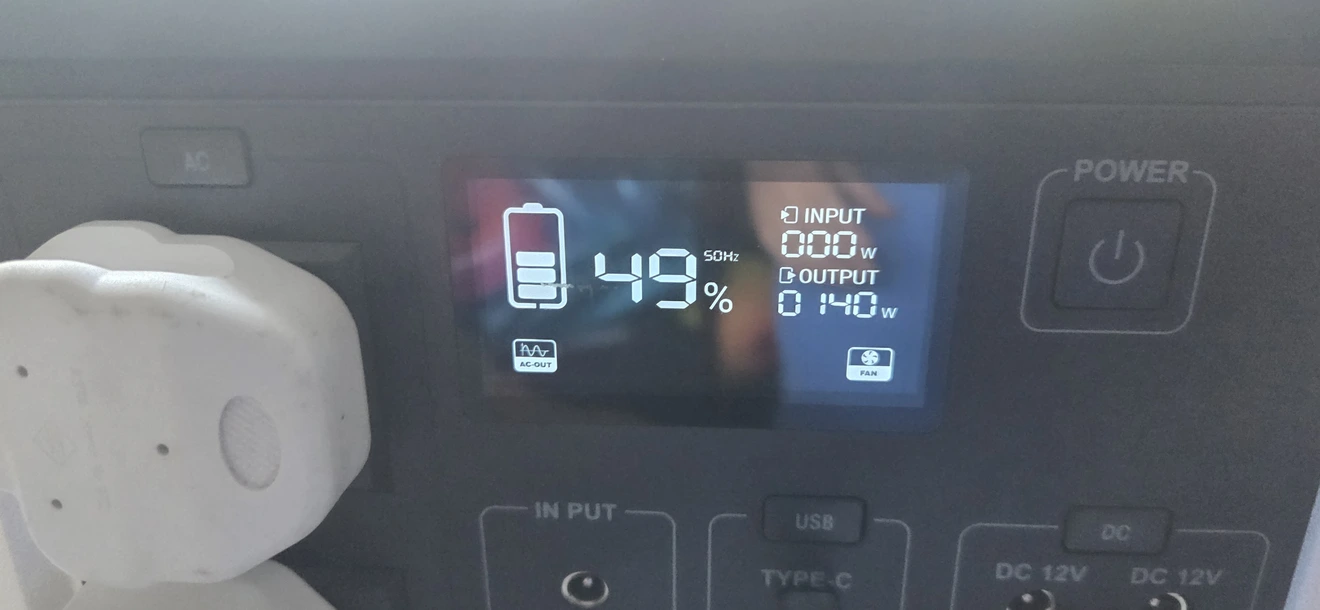
- My real-time calculations showed our two chest freezers pull a steady baseline draw of 150 Watts when running.
Strategy & Selection: The £1,100 Modular Solution
The easy option when shopping for emergency power is dropping £2,500 on one massive power station. But putting all your power into a single 40-kilogram box creates a huge single point of failure. If that monster unit is chained to the garage freezer downstairs, you can't easily lug it upstairs to run the Wi-Fi or charge laptops without stringing extension cords all over the staircase.
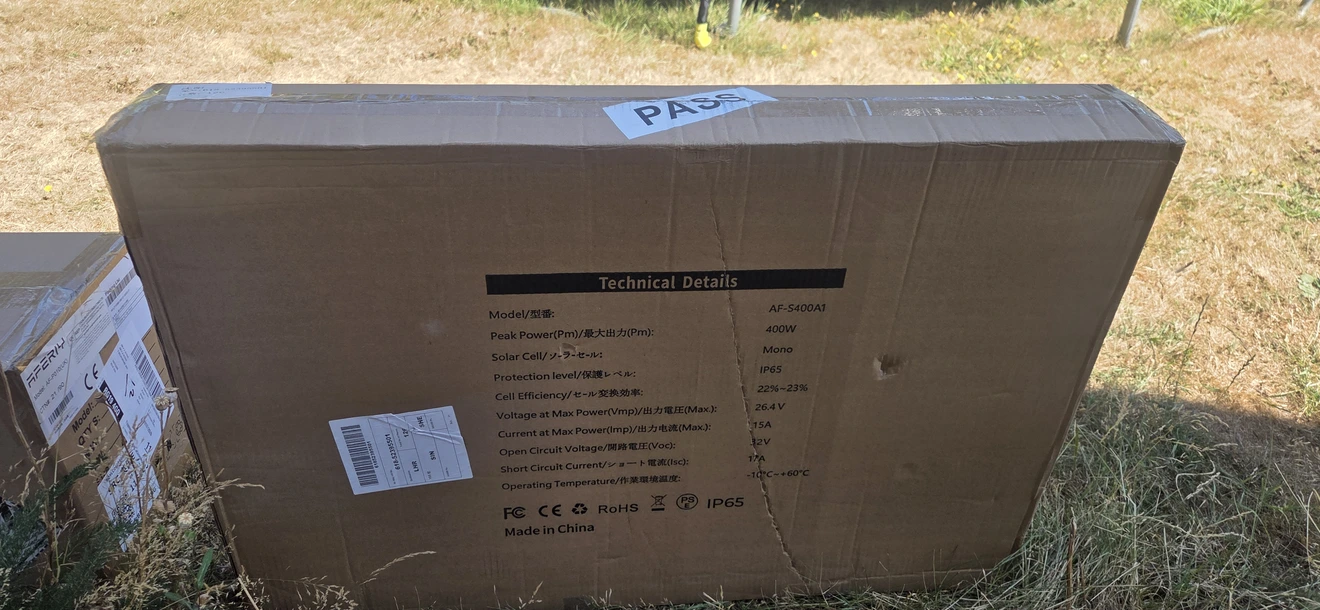
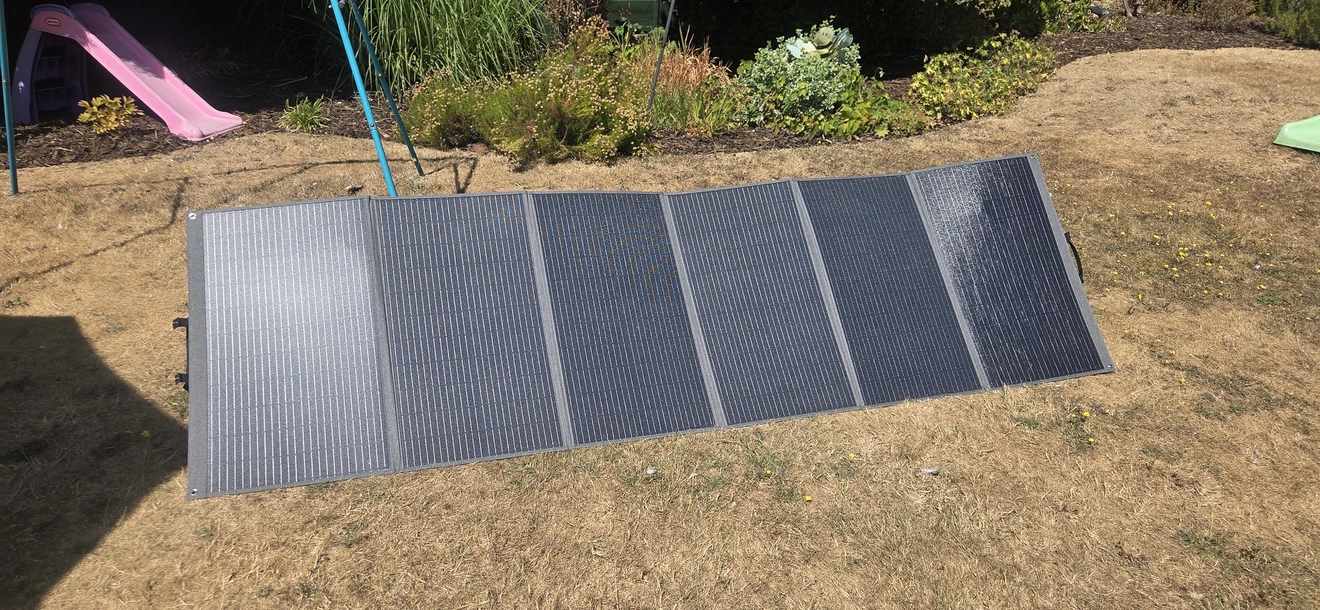
Instead, I built a modular setup. By stacking promo deals, vouchers, and timed discounts, I bagged 2.5kWh of total battery capacity and a 400W folding solar panel for just £1,148.09.
This dual-battery strategy delivers three massive advantages:
- Load Separation: Critical, high-draw appliances stay isolated from lightweight household gear.
- Shared Solar Generation: A single high-output 400W solar array can top up whichever battery needs power most throughout the day.
- Seamless UPS Support: Built-in Uninterruptible Power Supply (<10ms switch time) ensures delicate electronics and cooling systems never drop out or reset.
Meet the Household Grid: Bertha and Leroy
Any piece of critical home infrastructure deserves its own identity.
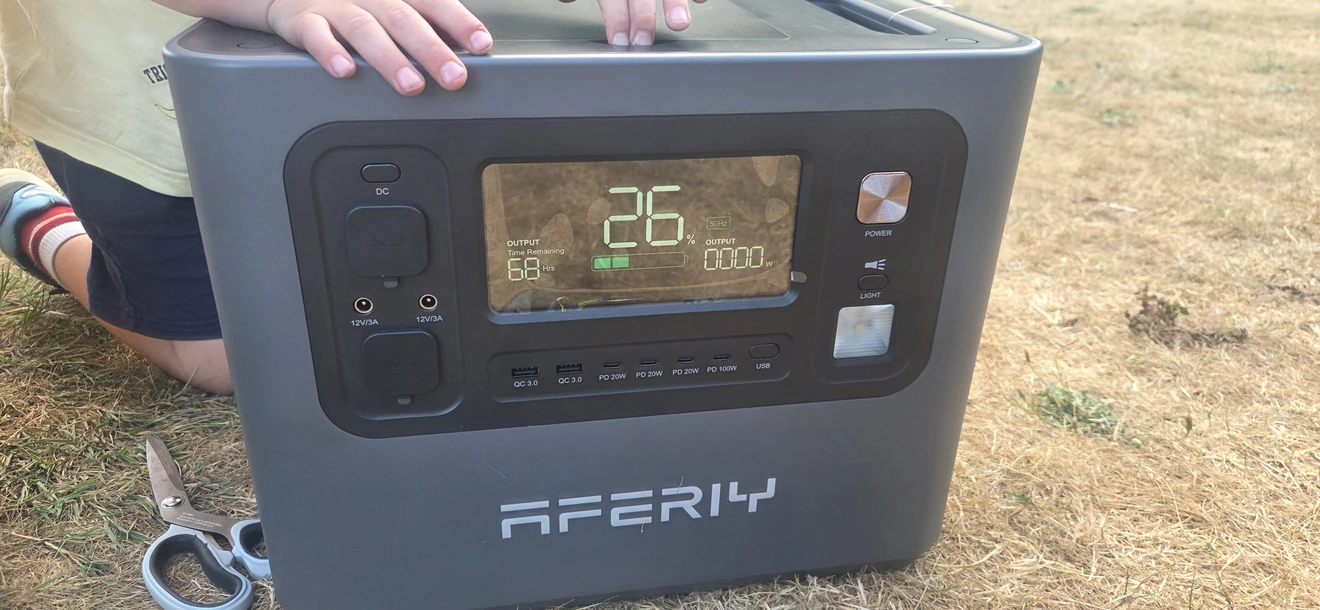
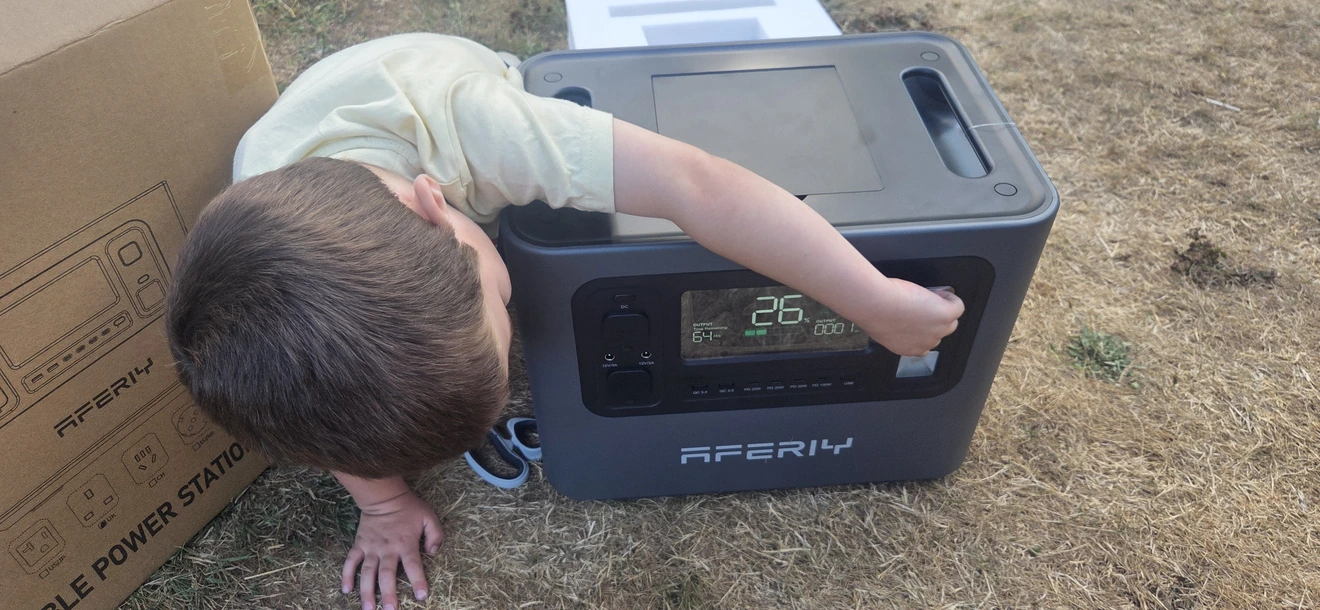
Bertha (B for Big) is our heavyweight anchor - an AFERIY P210 loaded with 2,048Wh of ultra-durable LiFePO4 battery capacity and a 2,400W pure sine wave inverter. Bertha sits permanently inline between the wall outlet and our chest freezers in continuous UPS mode. Under normal conditions, grid power flows straight through her. The microsecond the grid cuts out, Bertha takes over in under 10 milliseconds. The freezers don't even blink.
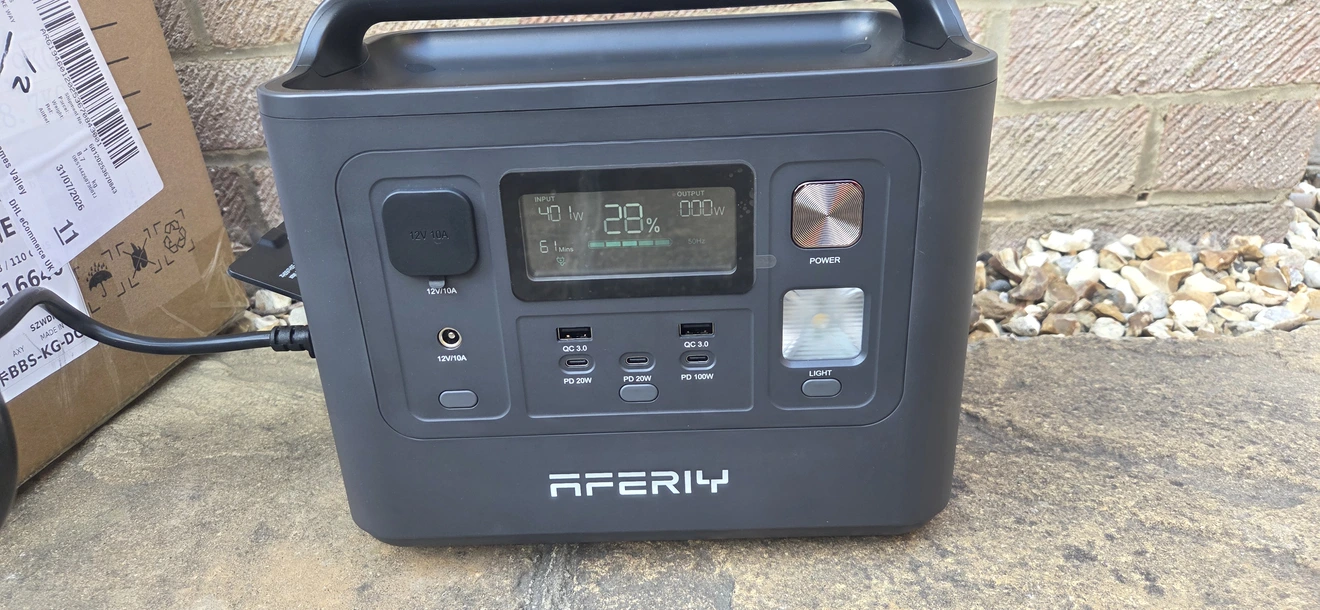
Leroy (L for Little) is her agile, lightweight wingman - an AFERIY P010 packing 512Wh / 800W. Weighing in at a nimble 6.25 kg, Leroy is our mobile taskforce. While Bertha stands guard over the cold storage, Leroy wanders around the house keeping laptops online, phones charged, or running lights and fans wherever we need them.
Power Options : Getting The team back to Full Juice
Bertha keeps her options open when it comes to topping up. You can plug her into the wall for a speedy 1100W fast charge, or hook up solar panels via the XT90 port to take in up to 500W. If you are on the move, she will happily juice up from a standard 12V car socket, and she even supports dual charging if you want to combine solar and AC to speed things along.
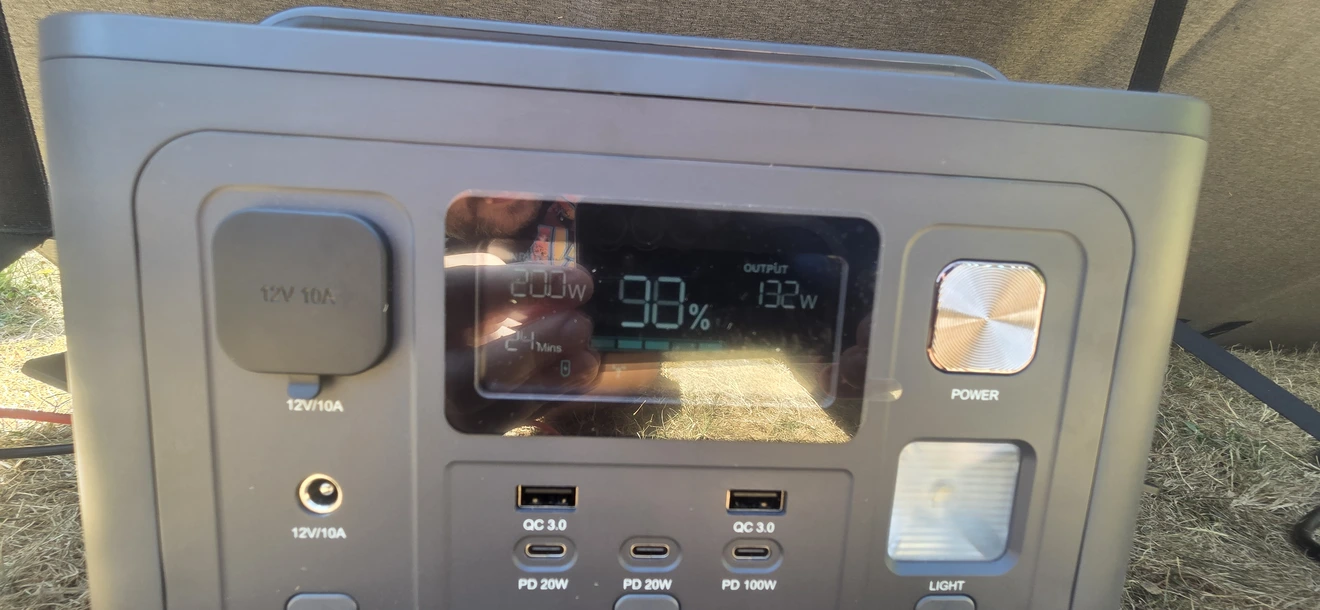
When it comes to powering your kit, she is a proper workhorse. You get three standard UK mains sockets pumping out 2400W of continuous power, with a 4800W surge peak for heavier gear. For tech, there is a heavy-duty 100W USB-C port for laptops, three 20W USB-C ports for phones, and two 18W USB-A quick-charge slots. On top of all that, she packs a 12V car socket, two DC5521 barrel ports, and a high-current 12V/25A XT60 outlet for beefier DC equipment.
Leroy on the other hand, doesn't let the side down, he keeps things nice and simple on the recharge front. You can plug him straight into a wall socket with a standard lead - no massive power brick required - for a fast 400W top-up that fills the battery in about an hour to an hour and a half. If you are out in the sun, his XT60 port handles up to 200W of solar power, getting him back to full strength in roughly three hours. He will also charge from a standard 12V car socket while you drive, or you can combine AC and solar input at the same time if you need to juice him up in a hurry.
On the business end, Leroy sports eight output ports to power your gear all at once. You get a single standard AC mains socket pushing out 800W of smooth, pure sine wave power. For modern gadgets, there is a heavy-duty 100W USB-C port that handles power-hungry laptops, alongside two 20W USB-C ports for phones and smaller electronics. You also get two 18W USB-A quick-charge ports, plus a classic 12V car socket to run standard DC kit.
Unboxing & Initial Setup: The 8-Step Reveal
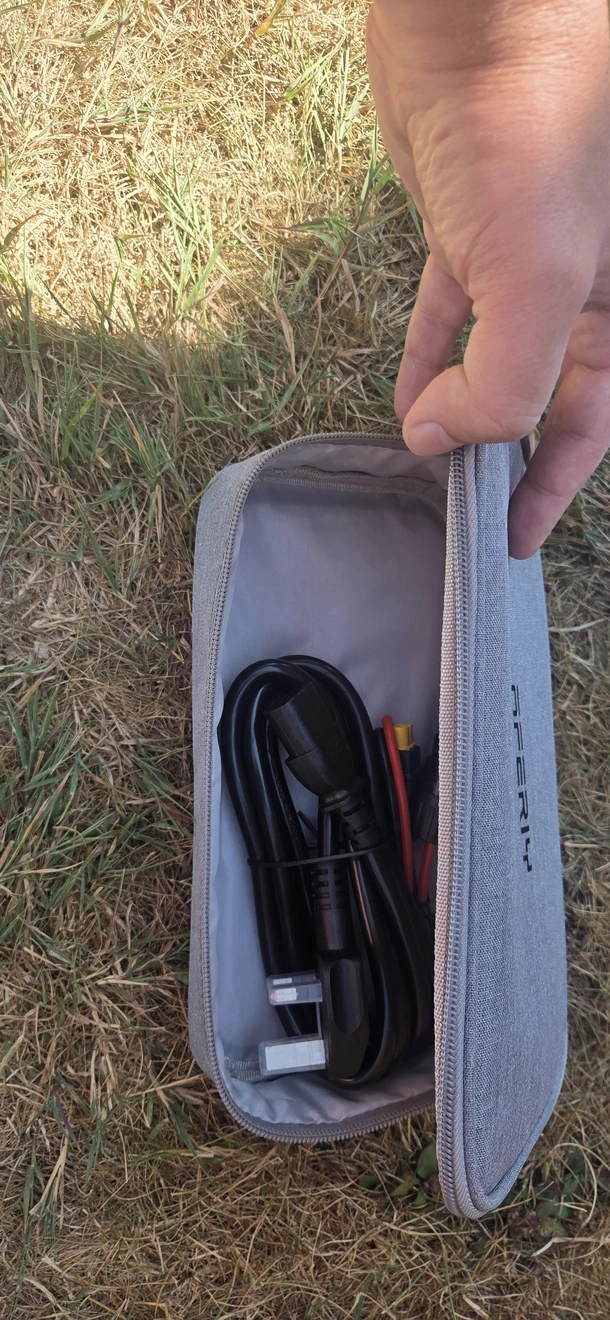
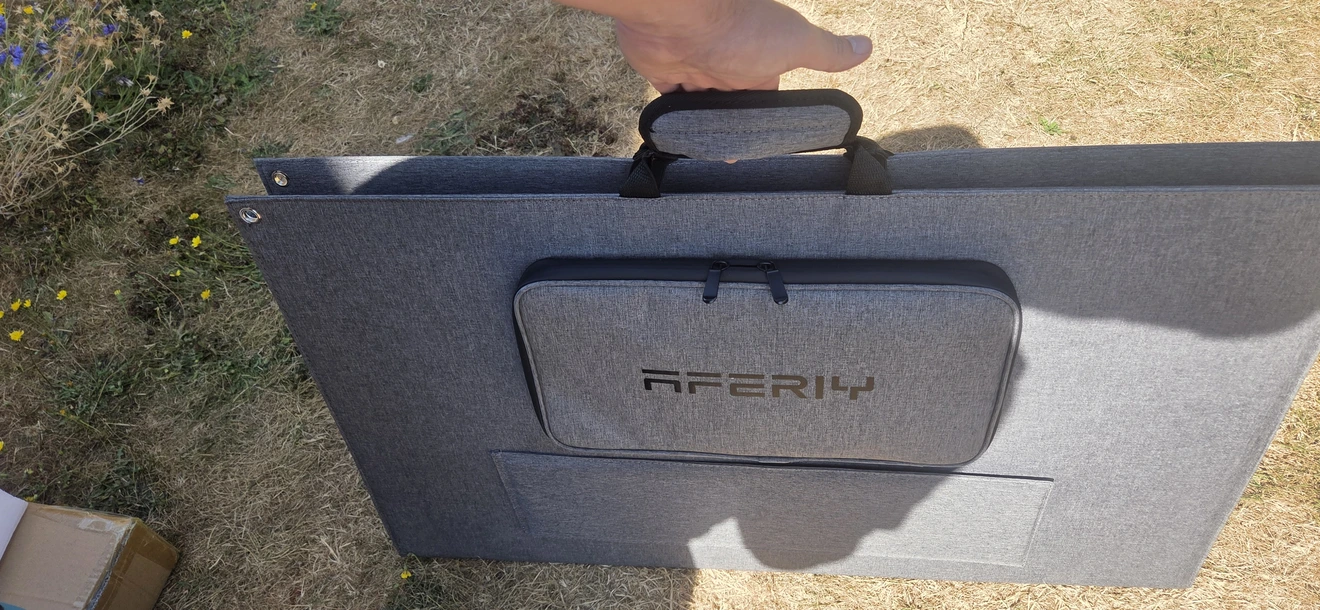
The gear landed on our doorstep in separate waves—the solar panels arrived first, Leroy turned up the next day, and four days later the heavy artillery (Bertha) finally made her grand entrance:
The Cable Conundrum: 15 Metres Without Power Loss
Snagging a decent solar panel is only half the battle; getting that free energy from the garden into the lounge without losing half of it along the way takes a bit of basic physics.
A 400W panel pulls a fair bit of current. If you try pushing that power through flimsy, off-the-shelf wire over a 15-metre run, the copper chokes it right up - turning your solar harvest into useless heat thanks to a heavy drop in voltage.
To sort this out, I hooked up a thick 6mm² (10 AWG) solar extension cable with proper heavy-duty MC4 connectors. The extra copper keeps resistance down to a minimum, getting full power straight into the house. To keep 15 metres of chunky cable from turning into a massive birds-nest, I taught myself the "Roadie" technique, suggested by the /r/SolarUK Sub-reddit
Discovery: The Truth About Compressor Wattage
Here is a proper bit of energy math I had forgot to mention: your appliances do not run full throttle all the time.
When the tech crew measured our freezers pulling 150W, they caught them right at peak struggle. The poor things had been sitting off for hours, so the compressors were thrashing away at 100% just trying to pull the temperature back down.
In real-world testing with Bertha, things looked much brighter. Once the freezers chill down to temperature, the motors click off. At idle, the combined draw drops to a tiny 5 to 60 Watts. So instead of conking out after 13 hours of continuous max load, Bertha’s 2,048Wh capacity easily keeps the cold storage ticking over for 20+ hours before she needs a solar top-up.
Leroy’s Alternate Duty?
While Bertha keeps watch over our main deep freezers in UPS mode, Leroy takes no popular assignment during peacetime.
When there isn't an active blackout, Leroy mostly sits on a shelf looking pretty. However, I'm currently looking into mains-powered cool boxes for road trips. Leroy would be absolute spot-on for powering one of these on the go. Plus, a mains cool box gives us an extra backup for refrigerated food when the grid goes down. Although I do have a dedicated beer fridge in the garage that I suspect my wife will promptly commandeer for the task and Leroy maybe on hand to power that fridge perhaps, although Betha does have a spare 240v plug avaliable 🤔. That battle is still very much up in the air between my wife and me on that one!
To be continued.... (perhaps!)